Chic Script Font for Creative Projects
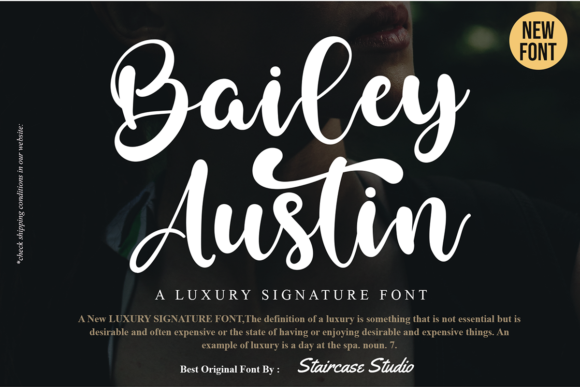
There I was, staring at a blank brand board, trying to find the right tone for a new boutique identity. The client wanted something elegant but approachable, something that felt personal yet professional. I scrolled through my font library, testing different options, until I landed on Bailey Austin. It wasn’t just another script font—it had a certain finesse that made it stand out.
Visual Characteristics and Personality
Bailey Austin is a fine and graceful handwritten font. Its delicate strokes and fluid curves give it a soft, feminine energy, making it perfect for brands that want to convey warmth and sophistication. The letterforms are slightly irregular, which adds character without sacrificing readability. It’s not overly ornate, but it has enough detail to feel unique and memorable.
The font’s personality is refined yet accessible. It feels like a handwritten note from a friend who knows their way around design. This makes it ideal for brands targeting a modern, stylish audience—think boutiques, skincare lines, or artisanal food products.
Real-World Branding Applications
I tested Bailey Austin in several real-world scenarios. On a logo concept, it brought a sense of authenticity and craftsmanship. When paired with a clean sans serif for the tagline, it created a balanced contrast that felt both modern and timeless. On a packaging mockup, it added a touch of luxury without being too flashy.
On a business card, Bailey Austin looked polished and professional. It didn’t overwhelm the design, and its legibility at small sizes was impressive. For social media graphics, it worked well as a headline font, drawing attention without being distracting. In web design, it shone in hero sections and call-to-action buttons, adding a personal touch to digital experiences.
One of the most interesting applications was on a shop sign. The font’s natural flow gave it a handcrafted feel, which aligned perfectly with the brand’s aesthetic. It felt like it belonged there, rather than being forced into the design.
Strengths and Limitations
Bailey Austin excels as a display font. It’s best suited for headlines, logos, and short phrases where its visual appeal can shine. It works well in editorial design, especially when used sparingly to add a human touch to layouts.
However, it’s not ideal for long body text. At smaller sizes, the fine details can become hard to read, especially in low-light environments or on screens with lower resolution. It also doesn’t pair well with very formal or corporate branding, where a more structured typeface might be more appropriate.
For commercial use, it’s important to check the licensing terms. Some fonts have restrictions on how they can be used in client projects, so always verify that you’re compliant before finalizing any design work.
Font Pairing and Design Tips
When pairing Bailey Austin with other fonts, it’s best to balance its fluidity with something more structured. A classic serif font like Georgia or Baskerville can provide a strong foundation, while a modern sans serif like Helvetica or Futura can add contrast without clashing.
It also pairs well with other script fonts, especially those with similar weight and style. However, avoid combining it with overly decorative or cursive styles, as this can create visual chaos. Instead, use it as an accent or highlight, letting it stand out without competing with other elements.
If you’re working on a project that requires multilingual support, make sure Bailey Austin includes the necessary glyphs. Most premium fonts cover common European languages, but if your project involves non-Latin scripts, double-check the font’s capabilities.
Testing and Final Thoughts
Before using Bailey Austin in final client work, I recommend testing it across different mediums. Print it on a sample card, view it on a screen, and see how it looks in various lighting conditions. This will help you understand its strengths and limitations in real-world settings.
Bailey Austin is a versatile script font that brings a chic, refined feel to any design. Whether you’re working on a logo, packaging, or social media graphic, it has the potential to elevate your creative work. Just remember to use it strategically, and always consider the context in which it will be seen.